

Imagine a technology that can digitally remove clothing from images with unprecedented accuracy. Undress AI technology has emerged as a revolutionary application of artificial intelligence, captivating the imagination with its capabilities.
I find it fascinating that this technology has sparked both intrigue and debate. The potential applications of Undress AI are vast, ranging from fashion and entertainment to more complex uses that challenge our perceptions of privacy and digital manipulation.
Key Takeaways
- Undress AI technology uses artificial intelligence to digitally remove clothing from images.
- The technology has various potential applications across different industries.
- It raises important questions about privacy and digital manipulation.
- The accuracy of Undress AI is unprecedented, making it a significant development.
- Its emergence has sparked both interest and debate.
The Reality of Undress AI in Today’s Digital World
In today’s digital landscape, Undress AI is making waves with its virtual clothing removal capabilities. This technology has sparked both fascination and concern among users, raising important questions about its implications and potential applications.
Defining the Technology Behind Virtual Clothing Removal
The underlying technology behind Undress AI is rooted in advanced image recognition and processing algorithms. These sophisticated systems utilize deep learning techniques to analyze and manipulate images, effectively removing clothing from digital representations of people. The process involves complex neural networks that can identify and isolate clothing items, allowing for their virtual removal.
Why This Technology Has Gained Attention
Undress AI has garnered significant attention due to its potential applications across various industries, including fashion, entertainment, and advertising. The technology’s ability to create realistic, manipulated images has raised both excitement and ethical concerns. As virtual undressing becomes more prevalent, it’s essential to consider the implications of this technology on our digital lives and the potential consequences of its misuse.
The popularity of clothing removal AI can be attributed to its potential for creative expression and its ability to push the boundaries of digital image manipulation. However, it’s crucial to address the ethical considerations surrounding this technology to ensure its responsible development and use.
The Evolution of Undress AI Technology
From rudimentary image editing to sophisticated neural networks, undress AI has evolved remarkably. The development of undress AI technology has been marked by significant advancements in image processing and neural networks, transforming the way we interact with digital images.
From Early Image Manipulation to Advanced Neural Networks
The early days of image manipulation involved rudimentary techniques such as manual editing and simple algorithmic adjustments. However, with the advent of advanced neural networks, the field has seen a paradigm shift. Deep learning models can now accurately identify and manipulate specific elements within images, such as clothing, with unprecedented precision.
The integration of Generative Adversarial Networks (GANs) has been pivotal in this evolution. GANs enable the creation of highly realistic images by pitting two neural networks against each other: one generates images, while the other evaluates their authenticity. This adversarial process results in generated images that are increasingly realistic.
Key Technological Breakthroughs
Several key technological breakthroughs have facilitated the development of undress AI technology. One significant advancement is the improvement in image segmentation algorithms, which enable the precise identification and isolation of objects within images.
| Technological Breakthrough | Description | Impact |
|---|---|---|
| Advanced Neural Networks | Utilization of deep learning models for complex image processing tasks. | Enhanced accuracy and realism in generated images. |
| GANs Integration | Incorporation of Generative Adversarial Networks for realistic image generation. | Increased realism and reduced artifacts in output images. |
| Image Segmentation Algorithms | Improved algorithms for precise object identification and isolation. | Better handling of complex images and edge cases. |
The evolution of undress AI technology is a testament to the rapid advancements in AI and image processing. As these technologies continue to evolve, we can expect even more sophisticated applications in the future.
How Undress AI Actually Works
The Undress AI technology operates on a sophisticated framework that combines Generative Adversarial Networks (GANs) and deep learning algorithms. This synergy enables the creation of highly realistic images by manipulating the input data in complex ways.
The Technical Foundation: GANs and Deep Learning
At the heart of Undress AI lies the power of Generative Adversarial Networks (GANs). GANs consist of two neural networks that work in tandem: a generator that creates images and a discriminator that evaluates them. Through this adversarial process, GANs learn to produce highly realistic images that can convincingly alter or remove clothing in images.
Deep learning algorithms further enhance this capability by allowing the system to understand and manipulate the intricate details of human anatomy and clothing. This combination is crucial for generating convincing results.
From Input to Output: The Processing Pipeline
The processing pipeline of Undress AI involves several key stages, starting with the Image Analysis Process. Here, the AI scrutinizes the input image, identifying clothing and other relevant features.
Image Analysis Process
During image analysis, the AI uses advanced algorithms to detect and segment clothing items. This step is crucial for understanding the context and content of the image.
Reconstruction Algorithms
Following analysis, Reconstruction Algorithms are applied to generate the output. These algorithms use the information gathered during analysis to create a new image that meets the desired criteria, such as removing clothing.
| Stage | Description | Key Technologies |
|---|---|---|
| Image Analysis | Analyzing input images to identify clothing and features. | Deep Learning, Computer Vision |
| Reconstruction | Generating new images based on analysis. | GANs, Deep Learning Algorithms |
By understanding how Undress AI works, we can better appreciate the complexities involved in creating such advanced technology. The combination of GANs, deep learning, and sophisticated image processing techniques makes Undress AI a powerful tool in the realm of AI virtual wardrobe applications.
Top Undress AI Applications in 2023
The proliferation of Undress AI tools in 2023 has transformed the way we interact with digital images. As this technology continues to evolve, various applications have emerged, catering to different needs and user experiences.
Undress AI App: Comprehensive Review
The Undress AI app has gained significant attention for its ability to remove clothing from images using advanced AI algorithms. Core Features and Interface include a user-friendly interface that allows users to upload images and select the areas to be processed.
Core Features and Interface
The app’s core features include:
- Advanced image processing using GANs
- User-friendly interface for easy image upload and selection
- Customizable output settings for desired results
Limitations and Restrictions
Despite its capabilities, the Undress AI app has limitations, including:
- Restrictions on image types and sizes
- Potential for misuse without proper safeguards
- Dependence on high-quality input images for optimal results
Popular Undress AI Websites and Online Tools
Several Undress AI websites and online tools have gained popularity, offering varying degrees of accessibility and user experience. Accessibility and User Experience are crucial factors in determining the effectiveness of these tools.
Accessibility and User Experience
These websites often provide:
- Web-based interfaces for easy access
- Varying levels of customization for output
- Some offer additional features like batch processing
Safety Measures Implemented
To mitigate potential misuse, many Undress AI websites have implemented safety measures, including:
- Image verification processes
- Usage guidelines and terms of service
- Reporting mechanisms for inappropriate content
Here’s a comparison of some popular Undress AI tools:
| Tool | Core Feature | Accessibility | Safety Measures |
|---|---|---|---|
| Undress AI App | Advanced GAN processing | Mobile app | Image verification |
| DeepSwap | Face swapping | Web-based | Usage guidelines |
| AI Cloth Remover | Clothing removal | Web-based | Reporting mechanism |

As Undress AI technology continues to advance, it’s crucial to consider both the benefits and potential risks associated with these tools. By understanding their capabilities and limitations, users can make informed decisions about their use.
Legitimate Uses of AI Clothes Removal Technology
Beyond the controversy, AI clothes removal has legitimate uses that are transforming industries. This technology is not just about manipulating images; it’s about creating new opportunities in fashion, medicine, and education.
Fashion Industry Applications
The fashion industry is one of the primary beneficiaries of AI clothes removal technology. It enables innovative solutions for customer experience and design processes.
Virtual Try-On Solutions
One of the significant applications is in virtual try-on solutions. Customers can see how clothes fit without physically trying them on, enhancing their shopping experience.
Design and Prototyping
Designers can use AI to visualize clothing designs on models or mannequins, streamlining the prototyping process and reducing the need for physical prototypes.
Medical and Educational Implementations
Beyond fashion, AI clothes removal technology is also being explored for medical and educational purposes. It can be used to create detailed medical illustrations or for educational training in healthcare.
| Industry | Application | Benefit |
|---|---|---|
| Fashion | Virtual Try-On | Enhanced Customer Experience |
| Medical | Medical Illustrations | Detailed Educational Content |
| Education | Training Simulations | Improved Learning Outcomes |
These applications demonstrate the versatility and potential of AI clothes removal technology, showing that its impact can be positive and far-reaching.
The Dark Side: Ethical Concerns of Undress AI
The rise of Undress AI has brought to light significant ethical concerns that cannot be ignored. As this technology becomes more accessible, it’s crucial to examine the potential risks and consequences associated with its use.
Non-consensual Imagery and Privacy Violations
One of the most pressing issues with Undress AI is the potential for creating non-consensual imagery. This technology can be used to generate fake nude images or videos without the subject’s consent, violating their privacy and potentially causing harm to their reputation. The ease with which these images can be created and disseminated online raises serious concerns about the long-term impact on individuals and society as a whole.
For instance, a person could use Undress AI to create compromising images of someone else without their knowledge or consent. This not only infringes on the person’s right to privacy but also could lead to emotional distress and other negative consequences.
Deepfakes and Identity Theft Risks
Undress AI also shares a concerning link with deepfake technology, which can be used to create convincing but false videos or images. This overlap raises the risk of identity theft, as malicious actors could use Undress AI to create convincing deepfakes for fraudulent purposes. The potential for financial fraud, reputational damage, and other malicious activities is significant.
Moreover, the sophistication of these AI-generated images or videos makes it challenging to distinguish between what’s real and what’s fabricated. This blurs the line between reality and fiction, potentially leading to a broader distrust of digital media and complicating efforts to address these issues.
Legal Landscape Around Undress AI Software
As Undress AI technology advances, legal frameworks are struggling to keep pace. The rapid development of Undress AI software has raised numerous legal concerns that lawmakers are still trying to address.
Current US Legislation on AI-Generated Nude Images
In the United States, the legal approach to AI-generated nude images is still in its infancy. Currently, there is no federal law specifically targeting Undress AI technology. However, some states have begun to introduce legislation aimed at combating non-consensual deepfakes.
For instance, California has passed laws criminalizing the creation and distribution of non-consensual deepfake pornography. Similarly, Texas has enacted legislation making it a crime to create or distribute AI-generated explicit content without consent.
These state-level initiatives reflect a growing recognition of the need to regulate Undress AI software. However, the patchwork nature of these laws means that there is still a long way to go in terms of comprehensive federal regulation.
International Approaches to Regulating Virtual Undressing
Internationally, countries are taking varied approaches to regulating virtual undressing technologies. The European Union has been at the forefront of AI regulation, with proposals for laws that could impact the development and use of Undress AI technology.
In Asia, countries like Japan and South Korea are also grappling with the challenges posed by AI-generated content. These nations are exploring regulatory frameworks that balance innovation with the need to protect individuals’ rights and privacy.
The global nature of Undress AI software means that international cooperation will be crucial in developing effective regulations. As the technology continues to evolve, it is likely that we will see a more unified global approach to regulating Undress AI.
Protecting Yourself from AI Virtual Wardrobe Misuse
With the growing prevalence of AI virtual wardrobe technology, individuals must take proactive steps to safeguard their personal images. The misuse of Undress AI can lead to serious privacy violations and other malicious activities. Therefore, understanding how to protect oneself is crucial in today’s digital landscape.
Digital Watermarking and Image Protection Tools
One effective way to protect your images from AI virtual wardrobe misuse is through digital watermarking. This technology involves embedding a unique identifier or pattern into your images, making it difficult for AI algorithms to manipulate them without detection. Additionally, image protection tools can help monitor and control how your images are used online.
Some popular digital watermarking techniques include:
- Visible watermarks that are easily noticeable
- Invisible watermarks that are detectable only through specific software
- Metadata embedding that provides information about the image
| Tool | Description | Features |
|---|---|---|
| Digimarc | A robust digital watermarking solution | Resistant to image manipulation, easy integration |
| ImageGuard | An advanced image protection service | Real-time monitoring, tamper detection |
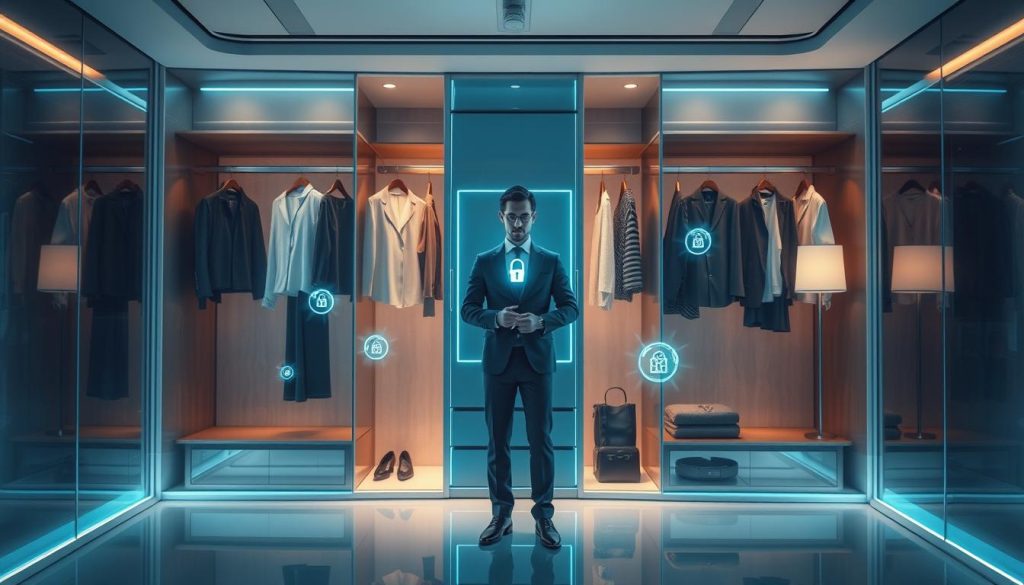
Steps to Take If You’re a Victim
If you become a victim of AI virtual wardrobe misuse, it’s essential to act quickly. First, document all evidence of the misuse, including screenshots and any relevant metadata. Then, report the incident to the relevant authorities and platforms where the misuse occurred.
Here are some steps to consider:
- Notify the platform or website hosting the manipulated content
- File a complaint with local law enforcement if necessary
- Seek legal counsel to understand your rights and options
By taking these steps and utilizing digital watermarking and image protection tools, you can significantly reduce the risk of AI virtual wardrobe misuse.
Expert Roundup: What Specialists Say About Undress AI
Experts in AI research and digital ethics are weighing in on the implications of Undress AI technology. As this technology continues to evolve, it’s crucial to understand the various perspectives on its potential impact.
AI Researchers’ Perspectives
AI researchers have been at the forefront of developing Undress AI, focusing on its technical capabilities and limitations. Some key points from their perspectives include:
- The use of GANs and deep learning algorithms to achieve high-quality image manipulation.
- The potential for Undress AI to revolutionize industries such as fashion and entertainment.
- Concerns about the misuse of this technology for creating non-consensual imagery.
Researchers emphasize the need for ongoing research to address the ethical concerns associated with Undress AI.
Digital Ethics Specialists’ Opinions
Digital ethics specialists are examining the broader societal implications of Undress AI technology. Their opinions highlight several critical issues:
- The need for robust regulations to prevent the misuse of Undress AI.
- Concerns about privacy violations and the potential for Undress AI to be used in cyberbullying and harassment.
- The importance of public awareness campaigns to educate users about the risks and benefits of this technology.
These specialists stress that a balanced approach is necessary to harness the benefits of Undress AI while mitigating its risks.
Alternatives to Undress AI for Virtual Fashion Experiences
While Undress AI has dominated the virtual try-on market, alternative technologies are emerging to address privacy concerns. These new solutions aim to provide similar virtual fashion experiences without the ethical baggage associated with Undress AI.
Ethical Virtual Try-On Technologies
Ethical virtual try-on technologies are revolutionizing the fashion industry by allowing consumers to see how clothes fit without the need for physical try-ons or invasive image processing. These technologies use augmented reality (AR) and 3D modeling to create a more personalized and private experience. For instance, companies are developing AR apps that superimpose clothing items on users, allowing them to see how they look without processing their images.
AI Fashion Tools That Respect Privacy
AI fashion tools that prioritize privacy are gaining traction as consumers become more aware of data protection. These tools use federated learning and differential privacy to ensure that user data remains secure. For example, some AI-powered styling apps allow users to upload pictures of clothing items they own, and the AI suggests outfits without storing the images. This approach not only respects user privacy but also provides a personalized shopping experience.
As the demand for virtual try-on experiences continues to grow, it’s likely that we’ll see more innovative solutions that balance functionality with privacy concerns. The future of virtual fashion may lie in these alternative technologies that prioritize user privacy while still delivering engaging and personalized experiences.
My Personal Experience Testing Undress AI Technology
As someone who’s been following the development of AI image manipulation tools, I decided to test Undress AI personally. This technology has garnered significant attention, and I was curious about its capabilities and limitations.
Methodology and Ethical Boundaries
I approached this experiment with a clear methodology, focusing on the technical aspects and ethical implications. I used a variety of images to test the Undress AI app, considering factors like image quality and subject diversity. Ethically, I ensured that all images used were either publicly available or had the necessary permissions for use.
Results and Observations
The results were intriguing, showcasing the advanced capabilities of Undress AI. The technology demonstrated a high level of accuracy in certain scenarios, though it struggled with more complex images. I observed that the quality of the output was heavily dependent on the input image quality, a factor that users should consider when using this technology.
My experience testing Undress AI highlighted both its potential applications and the need for responsible use. As this technology continues to evolve, it’s crucial to address the ethical concerns associated with its use.
The Future of AI Virtual Undressing Tools
As we look to the future, AI virtual undressing tools are poised to undergo significant transformations. The rapid evolution of undress AI technology and undress AI software will be shaped by emerging technological trends and potential regulatory changes.
Emerging Technological Trends
The future of undress AI technology will be influenced by advancements in artificial intelligence and machine learning. Improved algorithms and increased computational power will enable more sophisticated and accurate virtual undressing capabilities. For instance, the integration of Generative Adversarial Networks (GANs) will continue to enhance the realism of generated images.
Potential Regulatory Changes
As undress AI software becomes more prevalent, regulatory bodies may implement new laws to govern its use. Potential regulatory changes could include stricter privacy protections and guidelines for the ethical use of virtual undressing technology. These changes will likely have a significant impact on how undress AI technology is developed and deployed in the future.
Conclusion: Navigating the Complex World of AI Image Manipulation
Navigating the complex world of AI image manipulation, particularly undress AI, requires a nuanced understanding of its technological, social, and ethical implications. Throughout this article, we’ve explored the evolution, applications, and concerns surrounding this technology.
The undress AI technology has the potential to revolutionize various industries, from fashion to healthcare, by providing innovative solutions for virtual try-on, medical imaging, and more. However, it also raises significant ethical concerns, including privacy violations and the potential for misuse in creating non-consensual imagery.
As we move forward, it’s crucial to strike a balance between harnessing the benefits of undress AI and mitigating its risks. This involves developing and implementing robust regulations, promoting digital literacy, and fostering a culture of responsible AI development and use.
By understanding the complexities of undress AI and its far-reaching implications, we can work towards a future where this technology is used to enhance our lives while respecting individual rights and dignity.